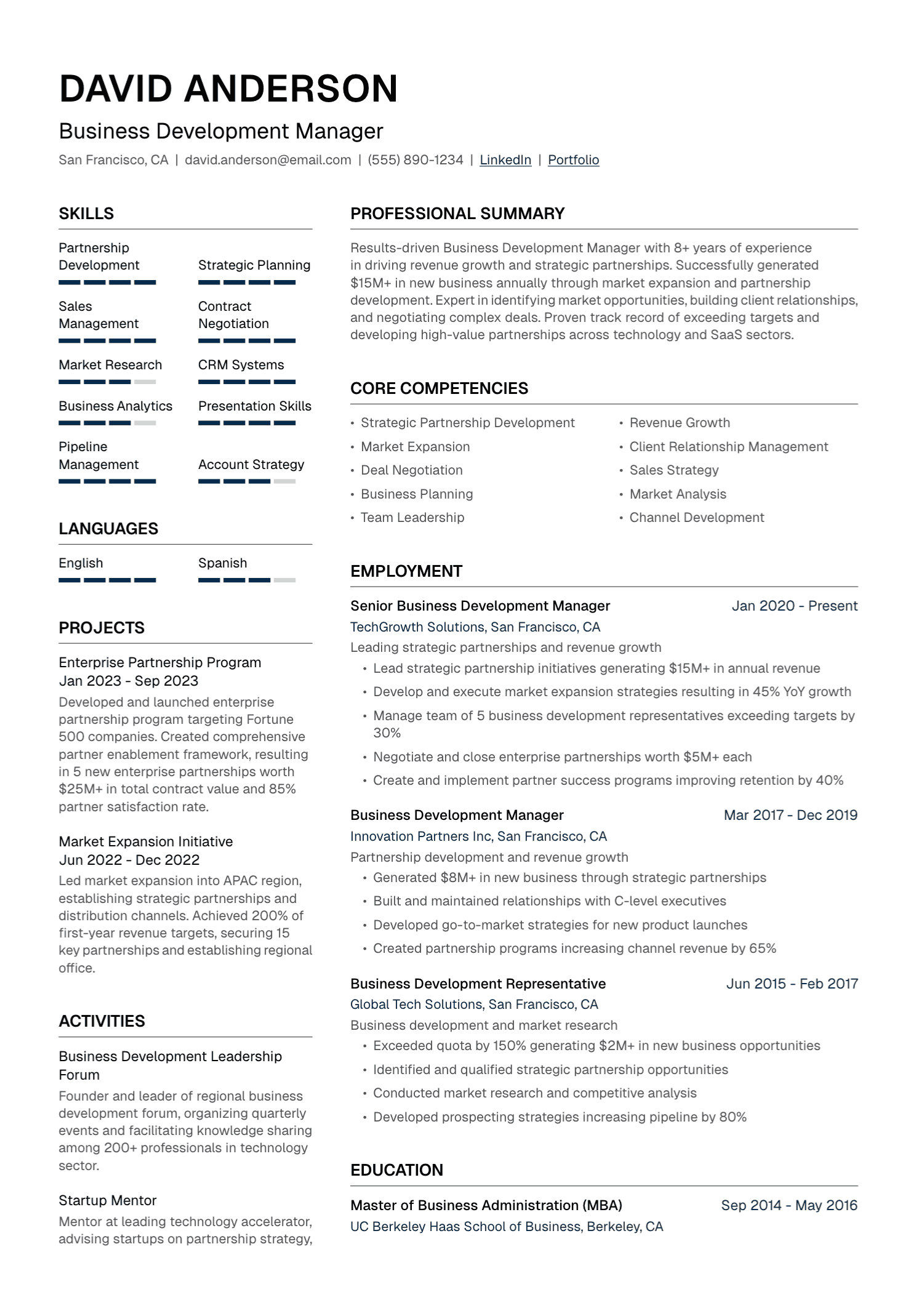
The education section of a first resume takes about a minute to write, up to its last line. The university, the degree and the graduation date are facts that need no thought. Then comes the grade point average, a 3.2 for example, and with it a decision: type the number, or leave the line out.
The guides do not agree on what to do. One says to list a GPA of 3.0 or above, another sets the bar at 3.5, and commenters on forums insist that hardly anyone reads it. Few say where their number comes from, or what an employer does with a GPA once it is on the page.
There is evidence on both points. American employers have been asked for years whether they screen applicants by GPA, and researchers have measured what a grade is worth by showing employers resumes on which the GPA was assigned at random. The short answer on putting a GPA on a resume is this. A student or recent graduate with a 3.0 or better should list it, because 3.0 is the cutoff employers most often report using. Below 3.0 the line can come off, unless the posting asks for it. After the first job it is rarely needed at all. What follows shows where that answer comes from, and then takes the cases it does not settle: the major GPA, Latin honors, rounding, and what to put in the space when the number is left out.
Where the 3.0 rule comes from
Thresholds are handed out freely. Berkeley’s career center holds that “it is appropriate to include your GPA on your resume if it is 3.0 or above”. Purdue’s writing lab draws nearly the same line from the other side: “Generally, if you have a 3.0 or lower, you may want to omit your GPA.” The job site Indeed recommends listing a GPA of roughly 3.5 to 4.0, and the course provider Coursera also says 3.5. None of the four pages cites a survey or a study.
The 3.0 figure does have a source, and it is the employers themselves. The National Association of Colleges and Employers (NACE) surveys the organizations that recruit on American campuses, and it has long asked them whether they screen candidates by GPA. In the edition NACE dates to 2019, according to the association, 73 percent did, which meant that they “required a candidate to have a minimum GPA, typically a 3.0, to be considered for an interview”.
The federal government uses the same number. Under the Office of Personnel Management’s Superior Academic Achievement provision, which decides whether a new graduate is eligible for certain jobs at the GS-7 grade, one of the qualifying tests is a GPA of “3.0 or higher out of a possible 4.0”.
So 3.0 is a line that employers draw and write down. The 3.5 figure is harder to trace. Some employers set a higher minimum of their own and state it in the posting, and on a Hacker News thread from 2013, in which a student with a 3.4 asked whether to list it, one reply put the usual screen at about 3.0 and added that some companies use 3.5. That is an anecdote. NACE, reporting on its survey for the class of 2022, wrote that among employers screening by GPA “3.0 is the most common cut off”.
How many employers still screen by GPA
The cutoff has stayed where it was. What has changed is the share of employers applying it. NACE names each edition of its Job Outlook survey for the graduating class it covers and collects the answers in the late summer and autumn before, so the year NACE attaches to a figure is one ahead of the year the employers answered. These are the figures it has published:
| Job Outlook edition | Survey answered | Employers screening by GPA |
|---|---|---|
| 2019 | August to October 2018 | 73% |
| 2023 | August to September 2022 | 37% |
| 2024 | August to September 2023 | 38.3% |
| 2025 | August to September 2024 | 47% |
| 2026 | August to September 2025 | 42% |
The fall was steep, and it has stopped. NACE’s director of research wrote in November 2024 that the share had “steadily decreased to an all-time low of 37% in 2023”. The Job Outlook 2025 report then put it at 47 percent, “up from 37% and 38.3% planning to do so in 2023 and 2024”. The Job Outlook 2026 survey, answered by 183 employers in August and September 2025, has it at 42 percent.
These numbers should be read loosely. Each survey draws between about 160 and 260 responses, most of them from NACE members, which tend to be organizations with established campus recruiting programs. The figure also moves from one sample to the next, and even from one NACE page to the next: the November 2024 article gives the 2025 figure as 46 percent, where the report page says 47. A follow-up survey in spring 2025, with 216 respondents, was headlined “Less than 40% of employers will screen candidates by GPA”, a few months after the fall survey had reported 47. NACE’s summary of its Job Outlook 2027 survey was online by November 2026. It gives no figure for GPA screening, and the full report sits behind a sign-up form. A fair summary of the figures that can be read is that about four in ten campus recruiters screen by GPA, and that the share is no longer falling.
NACE links the decline to skills-based hiring, which 70 percent of respondents to the 2026 survey reported using and which, in its words, “has partly supplanted GPA as a screening tool”. Where the cutoff survives, it works as a gate and little more. The spring 2025 report describes the sequence: “Once a student has made the GPA cut off, employers look at the student’s major and experience”. When employers were asked what decides between two otherwise equal candidates, a GPA of 3.0 or higher came further down the list, below general work experience, a leadership position and extracurricular activities. An internship came first.
What a GPA on a resume is worth
A survey records what employers say they do. Two experiments show what they do with a resume in front of them, and the answer turns out to depend on the employer.
In a study published in the American Economic Review in 2019, 72 employers recruiting seniors at the University of Pennsylvania each rated 40 hypothetical resumes, knowing that the ratings would be used to match them with real students. The GPA on each resume was assigned at random. One additional point of GPA raised a resume’s rating by 2.1 to 2.2 points on a ten-point scale, more than twice the effect of an internship at a prestigious firm. When the exercise was repeated with employers recruiting at the University of Pittsburgh, the effect of GPA was “one-tenth the size”. The authors put much of that down to their own design, since many of the test resumes came from majors those employers did not hire.
The second experiment went outside campus recruiting. The sociologist Natasha Quadlin sent 2,106 fictitious applications to entry-level job openings, varying the GPA, the major and the applicant’s gender, and published the results in the American Sociological Review in 2018. The paper is not freely available, so the account here follows its abstract and the Harvard Kennedy School’s summary, which puts the number of openings at 1,053. For men, according to that summary, GPA “had no statistically significant impact” on the chance of a callback, except among math majors, where the highest grades did best. Women with the highest grades were called back less often than women with moderate ones, and high-achieving men were called back almost twice as often as high-achieving women.
One study, now several years old, is no reason for anyone to hide a 3.9. It does suggest that in the open market for ordinary entry-level jobs a higher number is not reliably rewarded. Taken together, the two experiments and the surveys point the same way. GPA carries the most weight with selective employers that recruit on campus, which are also the employers most likely to state a minimum. Elsewhere it counts for less than the advice pages imply.
Major GPA, honors and other ways to show grades
Below 3.0, the usual advice is to leave the number off, and the data support it. Purdue’s guide warns that “potential employers may assume that you omitted it because it was bad”. For the four in ten that screen, that assumption changes little, since the number would have failed the screen anyway. The rest, in NACE’s description, “jump right to the candidate’s major and experience”.
There is one exception. When a posting states a minimum, or the application form has a GPA field, the number will be asked for whatever the resume says. On campus recruiting systems it is asked for separately. Berkeley tells recruiters that “Major, school year, GPA and work authorization are the screening criteria used for positions in Handshake”, its campus recruiting platform.
The cumulative GPA is also not the only honest measure. The federal rule accepts, as an alternative to a 3.0 overall, a 3.5 in the courses of the major, or a 3.0 computed over the final two years. That helps students whose record improved. One Hacker News poster described failing out of college, returning years later and earning a 3.7, which left a cumulative figure barely above 3.0. Two of the three replies suggested giving the GPA for the major courses. The condition is that the label says exactly what the number is:
GPA: 3.4/4.0
Major GPA: 3.6/4.0 (Economics)
GPA, final two years: 3.7/4.0
If a form asks for the cumulative figure, the cumulative figure is what goes in the form.
Latin honors carry information that a bare number does not, though each institution sets its own rules for them. At Boston University, for example, Latin honors go to the top 30 percent of each school’s graduating class: the top 5 percent graduate summa cum laude, the next 10 percent magna cum laude and the next 15 percent cum laude. The GPA needed for each is set separately by each school. An honor of that kind tells an employer where a graduate stood in the class, which a 3.7 cannot do when grading differs from one college to the next. Indeed and Coursera both suggest that the honor can replace the number. That is reasonable unless the posting sets a numeric minimum, in which case both belong on the line.
The scale needs stating as well. MIT calculates its GPA on a 5.0 scale, so a 4.3 there is not what it appears to be elsewhere. Writing “3.4/4.0” removes the doubt, and the guide to listing education on a resume covers foreign grades and degree classifications.
Rounding a GPA honestly
A transcript usually carries more decimal places than a resume line needs, and the temptation is to round in the helpful direction. The federal government has a written rule for its own hiring: “Grade-point averages are to be rounded to one decimal place. For example, 2.95 will round to 3.0 and 2.94 will round to 2.9.” That rule is part of the Superior Academic Achievement provision. It governs who qualifies for federal jobs and nothing else.
What private employers have is the transcript. Berkeley’s recruiting policies note that student GPAs are “self-reported in Handshake” and that the career office “does not verify the accuracy of student GPAs”. Its guidelines for on-campus interviews accordingly encourage employers to ask for unofficial transcripts “to verify year in school and GPA”. A figure that will be compared with a transcript should match it.
GPA: 3.5/4.0
Underlined: a figure that ordinary rounding does not produce.
GPA: 3.44/4.0
GPA: 3.4/4.0
Neither source sets a rounding rule for private employers, so what follows is reasoning from the two of them and not a cited standard. The two-decimal figure copied from the transcript cannot be disputed. Rounding to one decimal by the ordinary rule follows the convention the government applies in its own hiring, and it does no harm where no cutoff is in play. Near a cutoff the case is different. A 2.95 counts as a 3.0 for a federal job, but a private employer with a stated 3.0 minimum that later sees 2.95 on the transcript is free to read the resume as overstated. A GPA should not be rounded up across a stated minimum. There the two-decimal figure is the one to write. In Britain, where the grade is a degree classification, the graduate careers site Prospects is blunter: “altering your degree grade from a 2:2 to a 2:1 is classed as degree fraud”.
When to take the GPA off, and what replaces it
All of the evidence above concerns students and new graduates. NACE surveys entry-level hiring, and both experiments used resumes of people just leaving college. For experienced candidates there is only convention. Indeed and Coursera both put the limit at three years after graduation, and Coursera concedes that there is “no strict rule”.
The logic behind the convention is sound. A GPA stands in for a work record that does not yet exist. Once a first job supplies one, the line can go, and nobody will ask where it went. Latin honors are different. They are awarded with the degree and can stay as long as the degree is listed.
For a student whose GPA is staying off the page, the space is better used for the things employers say they look at next. Inside the education entry, that means the major, a thesis or project, and a few relevant courses.
State University, Bachelor of Science in Biology, May 2027
Senior thesis: antibiotic resistance in soil bacteria, with 40 samples sequenced and analyzed in R
Relevant coursework: Genetics, Biostatistics, Microbiology
Below the education entry, it means the experience section. The companion article on the college student resume shows how to turn a campus job, a class project and a club into the examples that employers ask for.
The last line of the education section
The student with the 3.2 should type it, as “GPA: 3.2/4.0”. It sits above the cutoff that employers most often report, about four in ten campus recruiters will look for it, and nothing in the surveys suggests that the rest hold a 3.2 against anyone.
A 2.8 comes off, unless the posting or the form asks for it, and the line goes to a thesis, a project or a strong major GPA with a plain label. A 3.44 is written as 3.44 or 3.4 and never as 3.5. Three years and one job later, the line is deleted, and the degree, with any honors attached to it, stays.
How UseResume helps
General-purpose chatbots such as ChatGPT and Claude will format an education section if asked, along with anything else. UseResume is built specifically for writing resumes. In its AI resume builder, the education entry sits in an ATS-friendly template with standard headings, the section order can be changed so that education comes first for a student, and every line the AI suggests can be edited, which matters when the figure has to match a transcript.
A separate version of the resume can be saved for each job, so the GPA can appear on the application whose posting asks for it and stay off the others. The resume checker then scores each version from 0 to 100 across 37 checks and lists what to fix first.
Create your account and settle the last line of the education section.