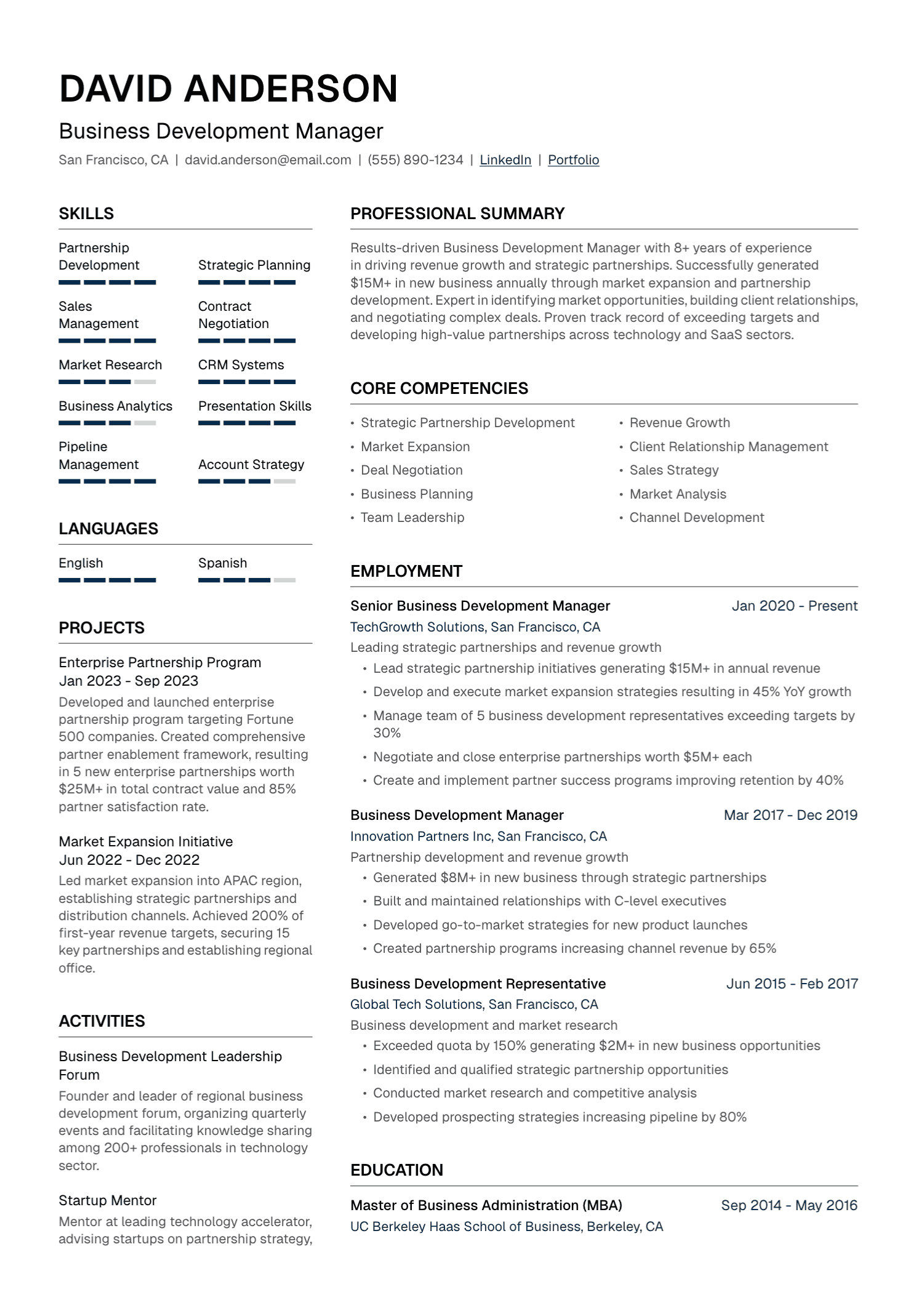
Sometime in the fall of sophomore or junior year, a student opens an internship application and reaches the field marked “Upload resume”. There is material to work with: a major, a GPA, a year behind the counter at the campus coffee shop, the treasurer’s post in a club, a group project that ate most of a semester. There is no internship, which is the reason for applying, and nothing on the list looks like the experience the posting asks for.
Advice is easy to find and hard to check. One guide says to list a GPA of 3.0 or better, another says 3.5, and neither says where the number comes from. Many of them promise that every job counts as experience.
Better evidence exists. Employers are surveyed every year about what they look for on a college student resume, and economists have run experiments in which employers judged student resumes whose details had been changed at random. The two kinds of evidence mostly agree. Fewer employers screen on grades than used to, though grades still count. An earlier internship is what most often separates similar candidates. And a skill earns credit only when the resume shows it being used. What follows sets out that evidence and then applies it: the order of the sections, a worked example built from a campus job, a class project and a club, and the calendar on which internship recruiting runs.
What employers say they screen for
The National Association of Colleges and Employers (NACE) surveys the organizations that recruit on American campuses. Its Job Outlook 2026 survey, answered by 183 employers in August and September 2025, shows how far grades have fallen as a filter. In NACE’s 2019 edition, 73 percent of employers screened candidates by GPA. In the 2026 survey, 42 percent do. What has partly taken its place is skills-based hiring, which 70 percent of respondents report using, most often at the interview (87 percent) and at screening (65 percent).
The skills in question are ordinary ones. In NACE’s spring 2026 update, answered by 185 employers, the abilities most often sought on an entry-level resume were teamwork, problem-solving and communication. Teamwork was looked for by 85 percent of the 163 who answered that question, and more than half of respondents named ten or more skills. NACE’s release attached a condition. It is not enough for candidates to list their skills: “Employers want to see examples.”
One item outranks the rest. Asked what decides between two otherwise equal candidates, employers named an internship with their own organization, or within their industry. Those were the only two attributes rated as having “very much influence”. A GPA of 3.0 or higher came further down the list, below general work experience, a leadership position and extracurricular activities. Students appear to have noticed: more than two-thirds of 2024 graduating seniors had done an internship by the time they finished college.
Three cautions apply. Most respondents are NACE members, which tend to be organizations with established campus recruiting programs, and each survey draws only about 200 responses. The questions are about hiring new graduates for entry-level jobs, not about interns as such. A survey also records what employers say they do, which is a different thing from what they do.
What employers do with a resume in front of them
For that, there are experiments. In 2013 four economists submitted about 9,400 fictitious resumes from recent graduates to business job openings in seven American cities, assigning at random whether the graduate had completed a three-month internship while in college. Those given the internship received about 14 percent more interview requests. The choice of major made no measurable difference. The data are more than a decade old, but the design isolates the internship, since everything else on the resumes was also assigned by chance.
A second study, published in the American Economic Review in 2019, looked more closely. In the 2016-17 academic year, 72 employers recruiting seniors at the University of Pennsylvania each rated 40 hypothetical resumes on a ten-point scale, knowing that their ratings would be used to match them with real students. The researchers varied the ingredients. A full point of GPA, from 3.0 to 4.0 for example, raised a rating by 2.1 to 2.2 points. An internship at a prestigious firm in the summer before senior year was worth as much as 0.41 of a GPA point. A second, ordinary internship a summer earlier was worth 0.21. Grades, in other words, had not stopped mattering to these employers, and neither had the name on the internship.
Two results were less comfortable. A summer job taken for the paycheck, such as barista, cashier or server, added nothing that could be measured. Neither did adding programming languages and statistical packages to the skills list, which led the authors to suggest, as one explanation, that employers “may consider skills listed on a resume to be cheap talk”. A Belgian experiment with more than 1,000 fictitious graduates reached a similar verdict on student jobs.
These findings need careful reading. Both American experiments concern hiring for jobs after graduation, not for internships. The Penn employers were firms that recruit at one Ivy League university. When the exercise was repeated at the University of Pittsburgh the effects were much weaker, and employers there cared more about an applicant’s major. Each job on the test resumes was also a fixed entry: a title, an employer and bullet points borrowed from a real student’s resume. The study measured what a cafe job earns when it is described the way students usually describe it. It did not test what the same job earns when the entry shows someone training staff or solving a problem.
That gap matters, because many students are not choosing between a bank and a coffee shop. Forty percent of full-time undergraduates held a job in 2020, and 43 percent in 2015, according to federal education statistics, and the Penn authors themselves noted that the preference they found “may create a disadvantage for students who cannot afford to accept (typically) unpaid internships”. For a student with a paid job and no internship, the surveys and the experiments point the same way. A job title or a list of skills earns little by itself. The examples employers say they want have to be written into each entry.
How to order a college student resume
University career offices largely agree on the skeleton. Harvard’s template runs contact details, education, experience, leadership and activities, then skills and interests, with no objective or summary at the top. Its rule is to “List headings (such as Experience) in order of importance”. For a student the degree in progress is the main qualification, so education goes first. Many internship programs are aimed at a particular class year, which makes the expected graduation date one of the most useful facts in that entry.
| Section | What it holds for a student |
|---|---|
| Education | College, degree, major, expected graduation date, GPA, honors, a few relevant courses |
| Experience | Internships, research, part-time and summer jobs, most recent first |
| Projects | Course, research or personal projects with a result that can be described |
| Leadership and activities | Clubs, teams and volunteering, with the role held |
| Skills | Software, languages and technical methods, each one also visible in a line above |
On the GPA, the guides disagree and cite no data. Berkeley’s career center says “it is appropriate to include your GPA on your resume if it is 3.0 or above”. Others draw the line at 3.5. NACE’s survey asks employers about a GPA of 3.0 or higher, which suggests that 3.0 is the line recruiters have in mind. Below that it can be left off, a choice examined in the article on putting a GPA on a resume. Where a posting states a minimum GPA, the number is expected on the resume either way.
High school is the other common puzzle. MIT’s career office tells first-years that they “may want to keep high school or secondary school listed”, and that it can go later, “as space is needed for more recent information”. The guide to listing education on a resume covers the details, including coursework and honors.
Length is settled. MIT’s resume guidance says: “Stick to one page, unless you have extensive experience or an advanced degree.” The longer argument about one page versus two concerns people with a decade of work behind them. Conventions differ abroad. In Britain the document is a CV, a university careers team quoted by the graduate careers site Prospects recommends no more than two A4 pages, and the grade on it is a degree classification such as a 2:1 instead of a GPA.
Turning coursework, jobs and clubs into evidence
Take the student from the opening, an invented example: a sophomore majoring in economics, applying for a marketing analytics internship. A first draft of the three entries tends to look like this.
- Barista, campus coffee shop. Made drinks and worked the register
- Group project for Statistics 201
- Treasurer, Economics Club
Every line is true, and none gives a recruiter anything to judge. Yale’s career office suggests two patterns for bullets: action, project, result, or “Accomplished [X] as measured by [Y] by doing [Z]”. Applied to the same three facts, the entries become:
- Barista and shift lead, campus coffee shop: trained 5 new hires and ran the morning rush with a team of 4, serving about 300 customers a shift
- Course project, Statistics 201: surveyed 180 students on meal-plan use with three classmates, analyzed the responses in R and presented the findings to the director of dining services
- Treasurer, Economics Club: managed a $3,000 annual budget and cut event costs by 15 percent by rebidding the catering order
Underlined: the details the first draft left out.
The student in this example did all of these things. The first draft simply did not say so. The coffee shop entry now shows teamwork and the training of other people. The project shows a problem worked through, findings presented to someone outside the classroom, and R in use instead of R in a list. The club shows responsibility for money. These are the items at the top of NACE’s list, given as examples. The figures need not be audited, but each should be one the student can explain when an interviewer asks.
The education entry carries the rest:
State University, Bachelor of Arts in Economics, expected May 2029
GPA 3.4. Dean’s List, fall 2025 and spring 2026
Relevant coursework: Statistics, Econometrics, Marketing Research
Which details to choose depends on the posting. According to NACE’s Job Outlook 2026 survey, employers that practice skills-based hiring frequently apply it when writing the job description (81 percent), so the posting is the nearest thing to a published list of what will be screened for. The resume should be tailored to it, in the employer’s words where they honestly apply. A posting that asks for “experience with survey data” is answered by the statistics project, and that entry moves up the page.
When internship recruiting happens
The resume is usually needed earlier than students expect. In NACE’s spring 2025 survey, 86.9 percent of employers said they would be recruiting for both full-time and internship positions that fall. In some fields the lead time is far longer. Yale’s career office publishes hiring timelines by industry. These are taken from the page as it stood in November 2026:
| Field | When internship recruiting tends to happen |
|---|---|
| Investment banking | About a year and a half before the summer in question |
| Software and computer science | August and September, with offers from September to November |
| Government | Around the start of the semester before the internship |
| Think tanks | Spring semester |
| Startups | Rolling, with postings between January and April |
The banking line is no exaggeration. In November 2026 Harvard’s career center told students that some finance employers “are or will soon be accepting applications for Summer 2028”. Yale adds the necessary warning that “there will always be some employers that are outliers and hire on a different schedule”.
More than a summer’s pay is at stake. Among the 284 organizations in NACE’s 2026 internship survey, the share of 2024-25 interns converted into full-time hires averaged 63.1 percent, the highest rate in five years.
The calendar has a practical consequence. A sophomore applying in September for the following summer has one year of college to show, which is why coursework, projects and campus jobs carry the first resume. It also means the document is never finished. Each term adds a course, a role or a number, and the version sent in January should not be the one written in August.
Back to the upload field
The student at the upload field has more to offer than it seemed, and less than the cheerful guides promise. Nothing on a first resume substitutes for an internship, which the surveys and the experiments both show employers rewarding. That is the reason to apply, and the application has to be made with the material at hand.
In plain terms: education goes at the top, with the expected graduation date and the GPA if it is 3.0 or better. The coffee shop stays, described as work done with and for other people, with numbers. The class project gets an entry of its own. The skills list is short, and every item on it appears in use somewhere above. The whole thing fits on one page and is ready by late summer, because the employers that recruit earliest do not wait. For those who miss the fall, Yale’s timelines show think tanks and startups still hiring in the spring.
How UseResume helps
ChatGPT and Claude are general-purpose tools that will draft a resume among a thousand other things. UseResume is built specifically for writing resumes. A student can start from scratch by answering guided questions, or import an existing resume, and the AI resume builder writes and rewrites the bullets inside an ATS-friendly template with standard headings. The section order is adjustable, so education can sit first, and every suggestion can be edited, which matters when the numbers have to be the student’s own.
Paste in an internship posting and UseResume tailors the resume to it, showing which of the posting’s keywords are matched and which are missing. A separate version can be saved for each application. The resume checker then scores the result from 0 to 100 across 37 checks and lists what to fix first.
Create your account and have the first version ready before applications open.