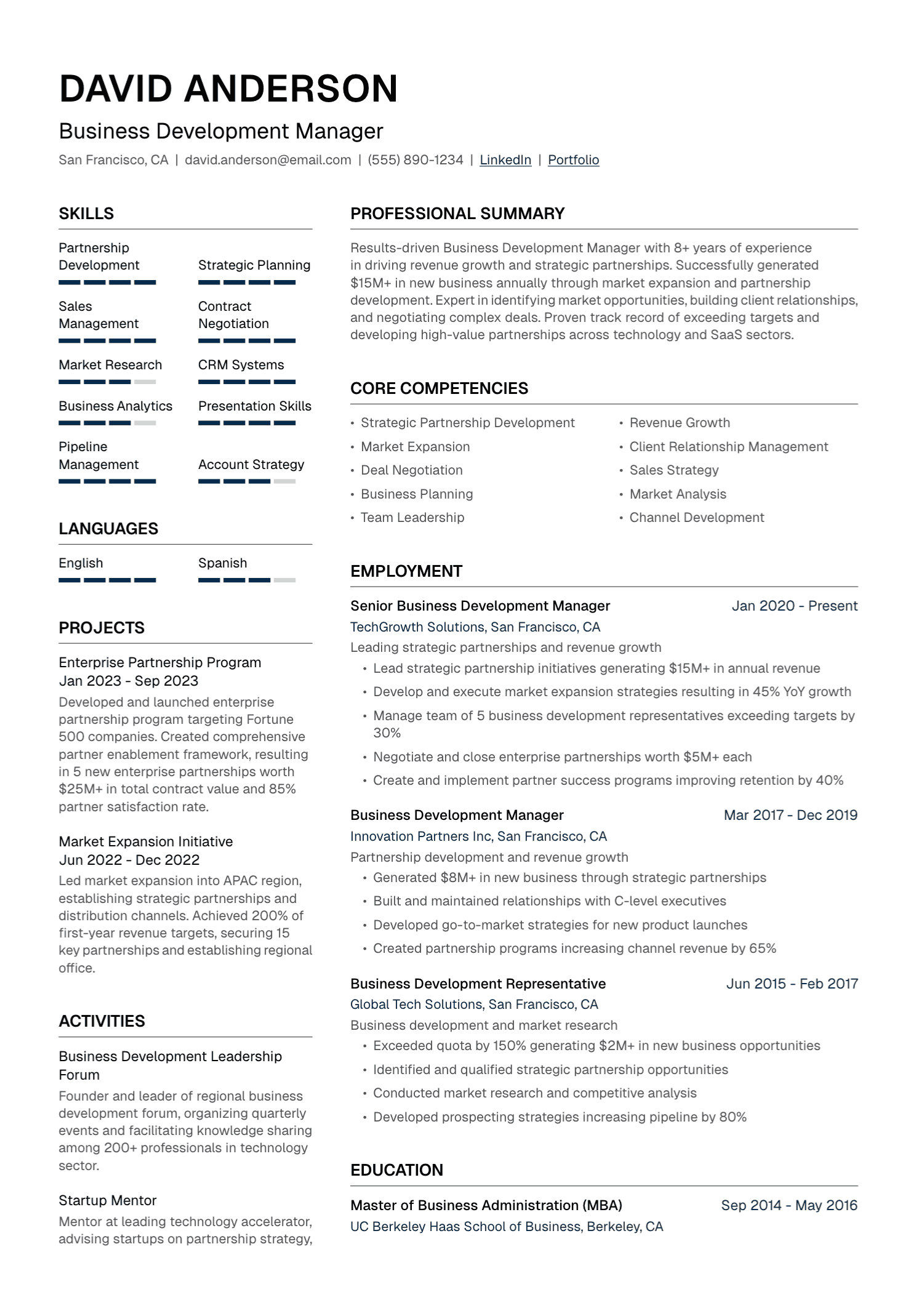
Somewhere in the middle of a good run at one company, the resume stops matching the career. The file still says Marketing Analyst, the title from the day of hiring in 2021. Since then there have been two promotions, a team of four to manage and a budget to answer for. None of it fits the usual format, which assumes one employer, one title and one pair of dates.
People in this position ask the same few things. In the threads on Blind, an anonymous workplace forum, that were read for this article, the questions were whether to show the earlier titles at all, whether the titles belong under one company heading or in separate entries, and whether three entries will look like three jobs. Advice pages raise a fourth: whether the software that reads resumes will cope with either layout.
The short answer is to show the promotion, and there are two sound ways to do it. Titles stacked under one employer suit a climb within the same kind of work. Separate entries suit a job that changed. Both depend on the same two conditions: every title carries its own dates, and the employer’s name is plainly the same each time. What follows sets out both layouts with examples, what vendors’ own documentation says about parsing, and what to do when a title changed for another reason, such as a sideways move, an acquisition or a new company name. The employers and figures in the examples are invented.
Why a promotion is worth the space
Opinion in the Blind threads is divided. In one, a poll that drew 152 votes asked whether to show every promotion or only the latest title, and one reply held that nobody cares about promotions. In another thread, an engineer promoted to senior 20 days earlier was advised by several replies to put the senior title against the full two years of employment.
The evidence points the other way on both counts. Promotions are scarce enough to mean something. ADP Research counted moves up the management ranks in its records for more than 50 million people at more than 96,000 US employers. In 2019 employers promoted 13 people for every 200 who worked the full year, a rate of 6.5 percent, and the rate in 2023 was the same. The count covers management ranks only, but it gives a sense of scale.
A promotion is also a verdict from people who watched the work, which is hard for an outside recruiter to get any other way. Matthew Bidwell of the Wharton School studied the personnel records of a US investment banking division from 2003 to 2009 and found that external hires received significantly lower performance evaluations in their first two years than internal workers promoted into similar jobs, while being paid about 18 to 20 percent more. One bank is a narrow sample, but it is some evidence that the people an employer chooses to promote tend to be good at the job. That is what a second title tells a reader.
Titles and dates also appear to be the part of a resume most likely to be read. In a 2012 eye-tracking study by the job site TheLadders, which is old and involved only 30 recruiters, almost 80 percent of review time went to six items: the name, the current title and company, the previous title and company, the dates of each of those two positions, and education. A promotion shown as a title with its own dates sits where that attention falls. One mentioned in the fourth bullet may never be seen.
As for the shortcut, a line reading “Senior Engineer, 2022 to present” says that the candidate has been a senior engineer since 2022. An employment verification usually covers dates of employment and job title, according to Checkr, a background check company, and employment history is among the things the Federal Trade Commission lists as open to an employer’s background check. If the employer’s records show the senior title beginning in 2025, the resume and the check will not agree. The shortcut also deletes the promotion, which was the thing worth showing.
Two layouts for a promotion on a resume
The first layout stacks the titles. The employer appears once, each title gets a line with its own dates, newest first, and a single set of bullets covers the whole period. It suits a climb within the same kind of work, where the later title is a more senior version of the earlier one. Indeed’s career guide recommends it when the positions were similar and only the title changed.
Calloway Foods, Columbus, OH
Senior Marketing Analyst, March 2023 to January 2025
Marketing Analyst, August 2021 to March 2023
- Promoted after rebuilding the weekly sales report, which cut preparation time from two days to three hours
- Measured the results of price promotions across 140 stores and presented them to the commercial director each month
- Trained two new analysts on the reporting tools
Stacking is compact. Its weakness is that the bullets are not tied to a title, so a reader cannot tell what was done at which level. One bullet should therefore say what earned the promotion.
The second layout gives each title its own entry, with its own dates and its own bullets, and repeats the employer’s name in each. It suits a promotion that changed the job, such as a move from doing the work to managing the people who do it. The older role needs fewer bullets than the current one. Indeed’s guide observes that hiring managers “are more concerned with your current responsibilities rather than what you were doing three years ago”.
Calloway Foods, Columbus, OH
Marketing Manager, January 2025 to present
- Promoted to lead the analytics team after a pricing test program raised promotional margin by 3 points
- Manage 4 analysts and a $1.2M research budget
- Present quarterly results to the executive team
Calloway Foods, Columbus, OH
Senior Marketing Analyst, March 2023 to January 2025
- Designed and ran the pricing test program across 140 stores
- Trained two new analysts on the reporting tools
Separate entries cost space, which matters on a one-page resume. They also raise two worries: that software will misread a promotion, which is the advice pages’ concern, and that a recruiter will count three jobs where there was one, which is the concern in the Blind threads.
What parsing software does with each
Some advice pages warn that stacked titles confuse applicant tracking systems. Coursera’s guide, for one, says that stacked entries are “not always the best for automated tracking systems” and that most systems find separate entries easier to read. It cites no test and names no system.
The documentation that vendors publish is more specific. Textkernel, a maker of resume-parsing software, describes in its developer documentation what the parser produces: a list of positions, each with an employer, a job title, a start date and an end date. One field lists the “other positions Ids that have the same Employer as this Position”. Another gives the candidate’s average tenure, counted “per employer, not per job”. The output format, in other words, allows for several positions at one employer.
Textkernel’s list of quality checks shows what the parser needs in order to get there. It flags resumes where jobs were found “without job titles”, “without job company names” or “without start dates”, and resumes where “more than one current job was found with the same employer”. Read as instructions, these say that each title needs its own line and its own dates, that only the latest title should run to the present, and that the employer of every position must be easy to find. A format suggested in one of the Blind threads, with the first and last titles joined by an arrow on a single line, fails the first of these.
Greenhouse, an applicant tracking system, publishes a list of reasons a resume fails to parse. Alongside columns, tables, headers and footers, it names resumes “without clear sections and differing formats throughout each section” and resumes “with incomplete job titles”, giving “Sr. Account Exec” in place of Senior Account Executive as its example. The promoted entries should therefore be laid out like every other entry on the page, with titles spelled out in full.
Neither vendor’s documentation says how a company heading followed by two titles is handled, or that one layout parses better than the other. Sometimes there is a practical check. Where an application form fills in its work history fields from the uploaded resume, those fields show what was read, and a missing title or merged dates can be corrected by hand. Where no such check is possible, separate entries that repeat the employer look like the safer choice, because they are the closest match to the structure Textkernel describes, with one employer and one title for each position. That is an inference from the documentation. No published test compares the two layouts.
Three entries, one employer
The second worry concerns people. In one Blind thread, someone who had transferred between teams and then been promoted asked how to list three titles without appearing to job hop. One reply asked how it could be job hopping when the person had never left the company.
An experiment bears on both the fear and the reply. Four economists sent 1,680 applications to 840 vacancies in German-speaking Switzerland in 2012 and 2013. The study was published in the Journal of the European Economic Association in 2021; the figures here are taken from its 2019 working-paper version, which is free to read. Each vacancy received two resumes from fictitious 26-year-olds with eight years of experience in the same departments. One candidate had spent those years at a single firm. The other had moved between four. The single-employer resume drew a callback 20.2 percent of the time, the four-employer resume 14.0 percent. When 83 human resources professionals were later shown the two side by side, they rated the four-employer candidate lower on work attitude and no differently on skill.
The study is Swiss, more than a decade old and limited to administrative and commercial jobs, and it did not test promotions. It is set beside later experiments in the article on job hopping on a resume. What it does show is that employers penalized the number of firms. The candidate who had moved through the same departments inside one firm did better.
Separate entries are safe, then, so long as a reader who is skimming counts one employer. The name should be written identically in each entry, the entries kept together, and the first bullet of the newer role opened with the word “Promoted”. The Bureau of Labor Statistics reports that median tenure with the current employer was 4.1 years in January 2026. Against that figure, three entries of about 20 months each read as short stays or as five good years, depending on whether the reader sees that the employer is the same.
Bullets that show the job got bigger
The layout shows that a promotion happened, and the bullets show what it meant. The weakest version announces the promotion and then lists duties.
- Promoted to Marketing Manager in 2025
- Responsible for marketing analytics and reporting
- Managed a team
The title line already says the first of these. A stronger version uses the same three lines for what earned the promotion and for how much larger the job became.
- Promoted to lead the analytics team after a pricing test program raised promotional margin by 3 points
- Manage 4 analysts and a $1.2M research budget
- Present quarterly results to the executive team
Underlined: the reason for the promotion and the new scope.
Growth shows best in figures that can be compared from one entry to the next: people managed, budget held, the number of stores or accounts covered, the seniority of the audience. If the analyst entry mentions 140 stores and the manager entry mentions four direct reports and a seven-figure budget, the reader sees the climb without being told about it. Each achievement belongs under the title held when it happened, and nowhere else.
A recent promotion needs no special handling. A title that is three weeks old goes on its own line with its true start date. Nor is a long run of promotions a problem. The person behind the Blind poll had been promoted three times at one employer, which in the stacked layout comes to four lines of titles.
Titles that changed for other reasons
Not every new title is a promotion, and some promotions come without a new title. The same two layouts cover most of these cases. The table sets out suggestions based on common practice. No study or vendor document prescribes them.
| Situation | A sound way to write it |
|---|---|
| New title, same job, after a restructuring | Stack both titles with their dates. Do not call it a promotion. |
| Sideways move to another team or function | Separate entries, each with its own bullets, and no “Promoted”. |
| Higher level, same title | Keep the title. Put the step and its date in a bullet. |
| Internal title that means little outside | Official title first, plain equivalent in parentheses. |
| Left the company and came back | Two entries in date order, with the other employer between them. |
| Company acquired or renamed | Current name, with the earlier name in parentheses. |
The fourth row is where honesty comes in. In a Blind thread from 2025, a developer whose official title was Dev II asked whether it could be written as senior developer, since the company treated it as a senior role. One reply said to write senior, on the ground that a resume should carry the title the public understands. Another said to err in the poster’s favor. Because verification commonly covers the job title, the safer course is to keep the official one and put the translation beside it.
Developer II (senior developer level), March 2024 to present
Acquisitions and name changes create the opposite problem, which is one employer that looks like two. Suppose Calloway Foods had traded as Marsh Lane Provisions until an acquisition in 2023. A resume showing Marsh Lane Provisions until 2023 and Calloway Foods afterward presents a single stay as a move to a recruiter counting employers, and possibly to software that counts tenure per employer. One line makes the continuity plain.
Calloway Foods (formerly Marsh Lane Provisions, acquired 2023), August 2021 to present
Federal applications in the United States are the main exception. The Treasury’s resume guidance asks for start and end dates with the month and year, the hours worked per week, and the series and grade of each federal job. Grades matter because federal rules require candidates for advancement to positions at GS-12 and above to have completed at least 52 weeks in positions no more than one grade lower. The practical course is to give each grade its own entry with exact dates, however similar the work. This is general information, not legal advice.
Three titles, two entries
Back to the resume that still says Marketing Analyst. The move into management changed the job, so it gets an entry of its own. The two analyst titles were one kind of work, so they are stacked beneath it. Both entries follow the same pattern and carry the same employer name.
Calloway Foods, Columbus, OH
Marketing Manager, January 2025 to present
- Promoted to lead the analytics team after a pricing test program raised promotional margin by 3 points
- Manage 4 analysts and a $1.2M research budget
- Present quarterly results to the executive team
Calloway Foods, Columbus, OH
Senior Marketing Analyst, March 2023 to January 2025
Marketing Analyst, August 2021 to March 2023
- Promoted after rebuilding the weekly sales report, which cut preparation time from two days to three hours
- Designed and ran a pricing test program across 140 stores
- Trained two new analysts on the reporting tools
The page now shows five years at one employer, two promotions with their dates, and the reason for each. Nothing has been hidden and nothing inflated. A recruiter who gives it a few seconds sees three titles rising under one name, and a parser has what it needs to find three positions, one of them current.
Whether to stack or to separate turns out to be the smaller decision. Both layouts work when every title has its own dates and the employer is named the same way throughout.
How UseResume helps
A general-purpose tool such as ChatGPT or Claude can rewrite a bullet, but the result still has to be pasted into a document and laid out by hand. UseResume is built specifically for writing resumes. An existing resume can be imported from a PDF or Word file, or from a LinkedIn profile, and brought up to date inside an ATS-friendly template with standard section headings.
The AI resume builder rewrites the bullets, and every suggestion can be edited, which is the moment to add the team size and the budget. The resume checker then scores the result from 0 to 100 across 37 checks and lists what to fix first.
Create your account and bring the old resume up to date.